

Future Talent in Supercomputing Requires Building Opportunities
Series: Sustainable Reality Reflections — Decisions in Emerging Technologies
Technical capability rarely appears fully formed. Most sectors talk about talent as though it arrives ready-made: skilled people emerge, join organisations, and sustain future growth. In practice, capability develops through exposure, repetition, mentorship, and access to real systems.
At SR25, two connected talks approached that reality from different directions.
Joseph Moore and Thomas Shtasel explored what students learn from cluster competitions, while Damian Jones explained why communities create them in the first place.
Together, the talks pointed to a broader truth: capable talent needs both pathways into the field and practical opportunities once people arrive.
Why pathways matter
Established technical communities often face a familiar challenge. Existing participants return year after year, but future growth depends on attracting new people.
Damian described how CIUK recognised that pattern and responded deliberately. Rather than waiting for interest to appear on its own, the conference introduced student poster sessions, awards for early-career researchers, and a UK cluster challenge competition designed to bring new entrants into the community.
These decisions matter because talent pipelines rarely build themselves. To be successful, communities seeking renewal should ensure they create visible entry points.
Practice builds capability
Creating access is only the first step. Joseph and Thomas discussed what happens when students move beyond attendance and into hands-on experience. In cluster competitions, teams work directly with hardware, configure software environments, optimise workloads, and solve problems under time pressure.
Students provision systems, manage constraints, and improve performance through a sequence of practical decisions. They work with applications such as LAMMPS or GROMACS and learn how software, hardware, and configuration interact in practice.
In this environment, skill sets quickly grow because participants learn through doing rather than observation.
Small decisions, real outcomes
These competitions also reveal how performance actually emerges. Participants decide how to compile code, move data between nodes, allocate resources, and balance workloads. No single step guarantees success. Outcomes depend on the accumulation of many smaller choices.
This lesson extends far beyond student events. Most complex systems behave in the same way. Results often reflect a chain of operational decisions rather than one dramatic breakthrough. Competitions simply make that relationship visible.
Communities shape careers
Damian made one of his strongest and simplest points when he argued that we should not judge success only during the event itself.
The longer-term test comes later, when students begin to view HPC as a career path, apply for roles, and enter the sector with confidence. That perspective reframes competitions entirely. They are not just contests. They are mechanisms for discovery, confidence-building, and professional development.
For many participants, they may provide the first clear sense that advanced computing is a field they can belong to.
Building the next generation
Many organisations discuss skills gaps as though they emerge suddenly and resolve themselves elsewhere. These talks suggested something more practical.
Future capability often grows where communities invest time, visibility, and access. It grows when institutions create pathways in and when those pathways lead to meaningful practice.
The next generation of expertise rarely appears by accident. It’s the communities that build it, and it is why this year Sustainable Reality is focusing on the next generation of HPC & AI.
__
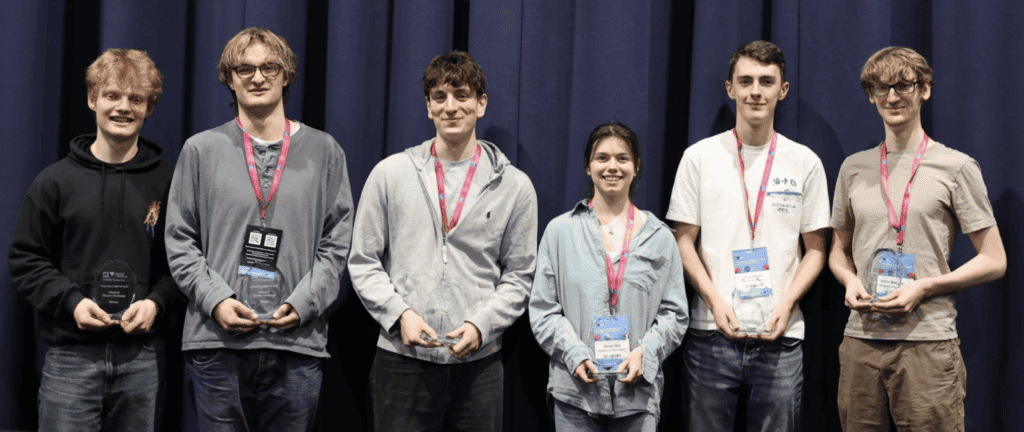
The header image showcases the 2025 CIUK Cluster Competition Winners, the Beariables at the University of Birmingham.
This essay forms part of the Sustainable Reality series on how progress is shaped by decisions in complex technological environments.
We send out monthly insights via our Flight Briefings. If you would like to get our take on the field of supercomputing, you can sign up here.