

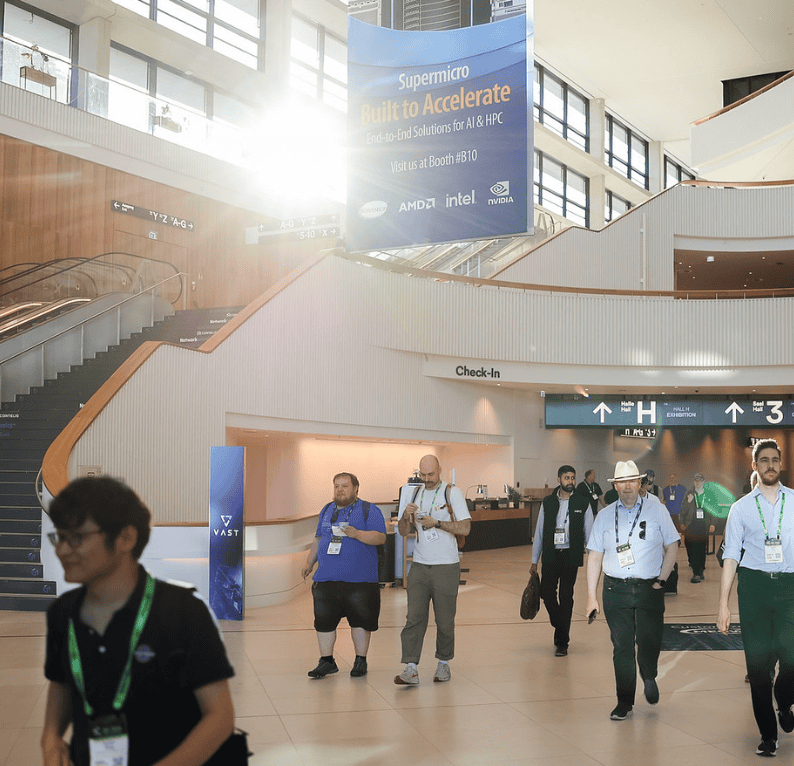
ISC26 showcased no shortage of innovation.
Artificial intelligence, quantum computing, photonic technologies, specialised accelerators and increasingly diverse software ecosystems all featured prominently throughout the conference programme and exhibition floor.
Yet one theme appeared repeatedly across discussions that otherwise had little in common. As computing environments become more capable, they are also becoming more complex.
The challenge facing organisations is no longer simply building powerful systems. It is coordinating technologies, software, workflows and people in ways that remain sustainable over time.
Software Is Becoming the Integration Layer
 One of the clearest observations from ISC26 was the growing importance of software as the mechanism that connects increasingly diverse computing environments. For many years, conversations about HPC were often framed around hardware choices. Processor architectures competed for attention, benchmark results dominated headlines, and system capability was frequently discussed in terms of performance alone. Those discussions remain important, but the landscape has become considerably more complex.
CPUs continue to evolve. GPUs continue to advance. AI accelerators are appearing across multiple markets. Quantum computing is progressing. Photonic technologies are attracting increasing interest. Each technology offers different strengths, limitations and operational requirements.
Few speakers suggested that a single architecture would dominate the future.
Instead, many presentations described a world where multiple technologies coexist, supporting different workloads and research objectives. The challenge is no longer selecting a single winning platform. It is enabling diverse technologies to operate as part of a coherent environment. As a result, software increasingly sits at the centre of the conversation.
Conversations around workflow management, orchestration, interoperability, portability, and software sustainability ran throughout the conference. Software is increasingly becoming the layer that enables organisations to coordinate diverse technologies while preserving usability, reproducibility and long-term value.
Operational Capability Is Moving Centre Stage
Another recurring theme was the growing importance of operational capability.
Historically, operational discussions often followed technical decisions. Organisations would design a system, deploy it, and then focus on running it effectively. Many conversations at ISC26 suggested that distinction is becoming less clear.
Operational considerations increasingly influence technology choices from the outset. Topics such as lifecycle management, observability, workflow orchestration, software maintenance and service delivery appeared alongside discussions of architecture and performance.
This shift was visible across both technical sessions and exhibition messaging. While vendors continue to innovate at the hardware level, many are also investing heavily in tools and platforms designed to simplify operations, improve visibility and reduce complexity.
The underlying challenge is straightforward. As computing environments become more diverse, they also become more difficult to operate. Organisations must manage not only hardware but also software stacks, workflows, data movement, security requirements, sustainability targets, and evolving user expectations.
Technical capability remains essential. Increasingly, however, operational capability determines how effectively that capability can be used.
Success Is Being Measured More Broadly
 Performance remains one of the defining characteristics of HPC.
Yet throughout ISC26, discussions increasingly focused on the outcomes enabled by performance rather than performance alone.
Productivity, trusted scientific outcomes, reproducibility, operational effectiveness and sustainability featured prominently in multiple sessions. These conversations were not presented as alternatives to traditional performance metrics. Rather, they reflected a broader understanding of what successful computing environments are expected to deliver.
This perspective was particularly evident in discussions around software ecosystems and long-term research impact. A highly capable system provides limited value if it cannot be used effectively, maintained sustainably or trusted to produce reliable outcomes.
The result is a broader definition of success. Performance remains a critical measure, but it increasingly sits alongside other considerations that influence whether technology delivers meaningful value over time.
The Human Challenge
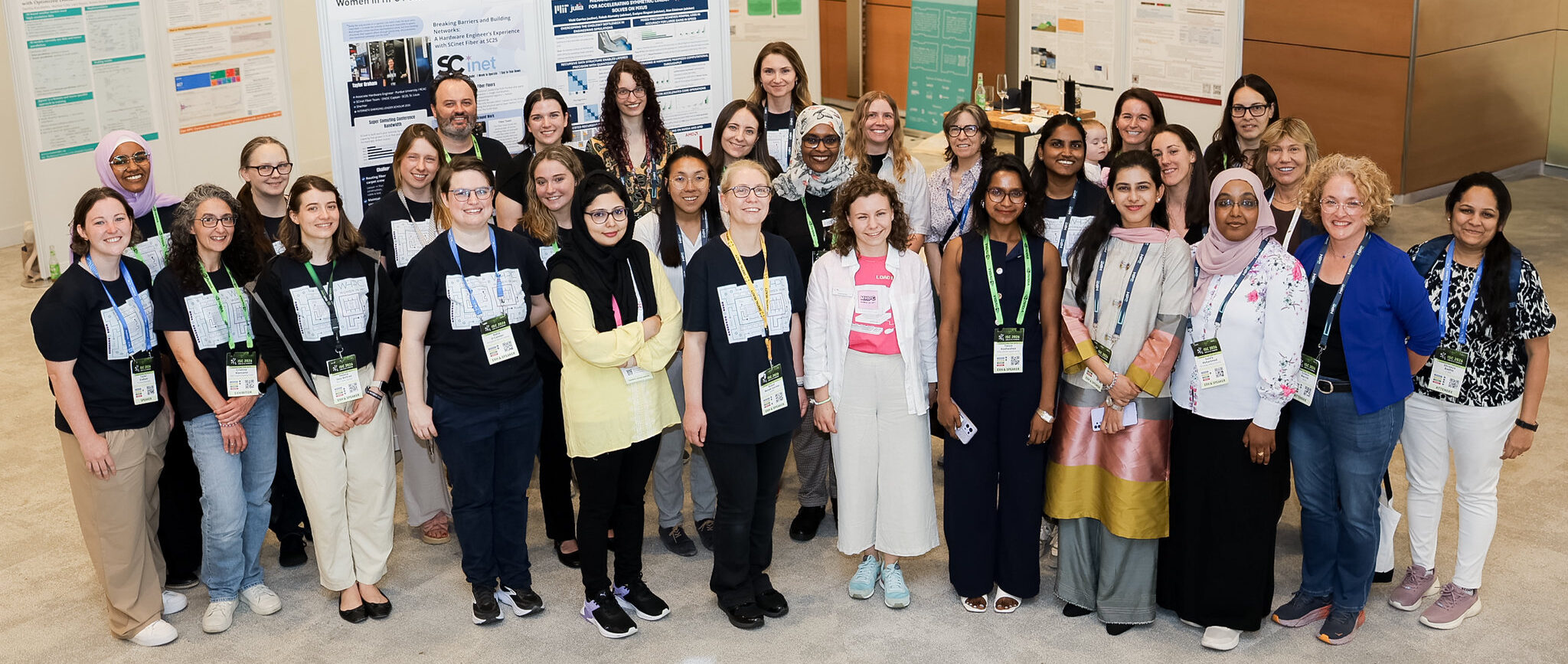 Perhaps the most significant discussions at ISC26 were not technical at all.
Workforce development, software stewardship, community sustainability, and knowledge transfer were evident throughout the conference. These conversations highlighted a growing recognition that technology alone does not determine success.
Modern computing environments depend upon people.
They depend upon researchers who understand how to use advanced systems effectively. They depend upon engineers who can maintain increasingly sophisticated software ecosystems. They depend upon communities that sustain projects beyond individual funding cycles and organisational changes.
As technologies continue to evolve, these human factors become increasingly important. The challenge is not simply developing new capabilities. It is ensuring that organisations possess the expertise, processes and communities required to support those capabilities over the long term.
This may explain why discussions around open-source communities, software foundations and collaborative governance models featured so prominently throughout the week. These initiatives are increasingly viewed not as supporting activities, but as essential infrastructure in their own right.
From Building Systems to Coordinating Ecosystems
Taken together, the discussions at ISC26 point towards an important shift.
The HPC community is no longer focused solely on building increasingly powerful systems. It is increasingly focused on coordinating ecosystems. Those ecosystems include hardware, software, workflows, operational practices, governance structures and people. Success depends not only on advancing individual technologies, but on integrating them effectively.
This does not diminish the importance of innovation. On the contrary, the pace of technological development remains remarkable. What has changed is the nature of the challenge.
As the number of viable technologies continues to grow, organisations must find ways to combine them into environments that remain usable, sustainable and effective over time.
Performance will continue to matter.
Hardware innovation will continue to matter.
Increasingly, however, the organisations that derive the greatest value from these advances may be those best able to coordinate the technologies, communities and operational capabilities that surround them.
That was one of the clearest messages emerging from ISC26, and it is likely to remain an important consideration long after this year’s announcements have faded from view.
—
ISC26 Field Notes
Throughout ISC26, we recorded a series of short daily video reflections from across the conference, capturing observations and conversations as they happened.
Watch the full playlist here: