

Why Supercomputing is Learning by Doing

Many technical fields rely on a combination of theory and practice, and supercomputing is no exception. Documentation, lectures, tutorials, and technical specifications all play an important role in building knowledge, but there is a difference between understanding how a system works and understanding how to work with it.

Clusters, schedulers, storage systems, and AI infrastructure are often introduced through diagrams and documentation. Those resources provide an important foundation, but they rarely tell the whole story. When we asked members of the Alces Flight team about learning and career development, one message came through consistently: experience matters.

Not because it provides all the answers, but because it creates opportunities to explore, experiment, make mistakes, and ask better questions.

Here’s what our team has learned along the way.

Beyond the Classroom

The most effective method of learning is immersion. Supercomputing can seem intimidating because of its complexity. Still, the key to understanding the language is to immerse yourself in real, practical experiences rather than learning HPC only as an abstract concept. When the clusters and cables are in your hands, and the code is at your disposal, your knowledge vastly expands as you begin to understand those systems from the inside out. 
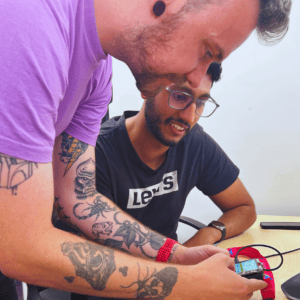
Having real-world experience and looking at where high-performance computing systems are used in combination with AI, it’s invaluable for people early in their careers to get to grips with that and build that experience as they start out.

Building Confidence Through Practice

Practice makes progress. Before trying to start enormous projects or fix complicated issues, you have to have solid foundations to build from. Skill sets grow from repetition, making complex concepts second nature. Common mistakes become recognisable, and the door to endless opportunities and new challenges opens.

To get in, run command line and see how servers run or find even simple things like a file system is very important. Once you learn the basics, it expands your knowledge. I can monitor hundreds of clusters and thousands of nodes better than when I first joined after doing it hundreds and hundreds of times.

Making Something

All software begins with an idea. Solid foundations built from repetition allow you to use your ideas to create and master aspects of HPC you never thought possible. Creating is one of the best ways you can challenge yourself and evolve your skills- you teach yourself different perspectives and routes to fix problems, beyond what you would find in a textbook. 
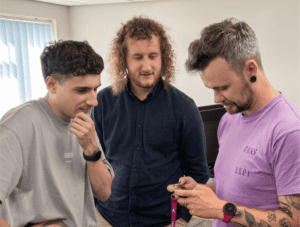
If you want to make a game, if you want to make a tool, just make something. It’ll be rubbish the first time you try making it, but you’ll learn something and then the next thing you do will be a lot better. Just make anything.

Learning from Others

Working as a team is a key strength, as collaboration is at the heart of supercomputing and the tech industry. By developing your own expertise and sharing your ideas, you foster continuous learning for everyone on your team.

Take notes! Take as many notes as you can because you never know when you might come back to it. Once you’ve taken notes of things you have a log, and it’s good to document and help other people in your team along the way.

The Opportunity to Try

One of the strengths of the HPC community is that it actively creates opportunities for people to learn through experience. Student Cluster Competitions are one example, challenging teams to design, build, optimise, and operate systems while making real decisions under pressure.

The competition itself is only part of the experience. Participants learn to collaborate, solve problems, adapt to changing situations, and work with technologies they may never have encountered before. Whether they continue into careers in supercomputing or take those skills elsewhere, the experience often becomes a foundation they build upon throughout their careers.

Continuing the Journey

Working directly with HPC systems builds confidence and technical capability. While documentation, tutorials, and classroom learning all have an important role to play, there is no substitute for trying something, solving a problem, making a mistake, and trying again.

At Alces Flight, we believe creating pathways into HPC and AI means creating opportunities to participate. If you’re ready to take the next step, the initiatives below are designed to help you explore the technologies, skills, and communities that power modern research computing.

Sustainable Reality Showcase

Introducing students, educators and researchers to the technology, skills and communities that power modern HPC and AI.

CIUK 2026 Cluster Challenge

Providing participants with the opportunity to gain practical experience designing, building and operating systems in a team challenge environment.

This piece was captured thanks to the efforts of our Work Experience Intern, Jay Mayers.

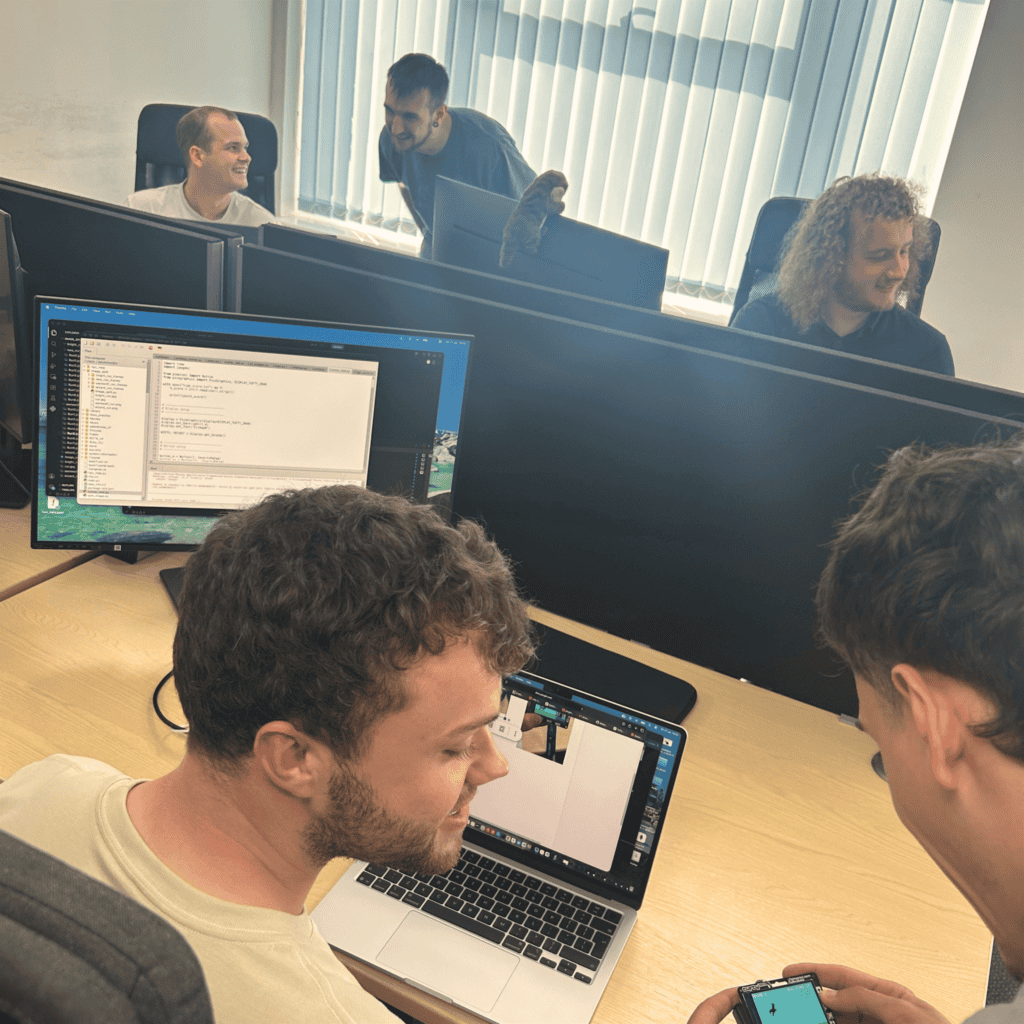
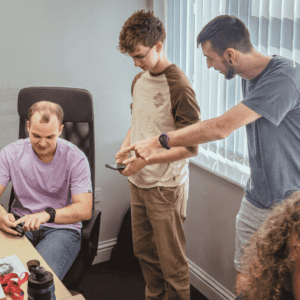
Photos taken from our regular team hackathons.  Thanks to our Flight Crew for allowing us to capture our July 2026 event.

We send out monthly insights on the supercomputing community, covering topics in decision-making, workforce development, and open-source technology.  If you would like to get our take on the field, you can sign up here.

Wait, there’s more...

Discover our other blog posts